ATMOSPHERIC SPRINGS: The Future of Fog in Los Angeles
School: Harvard GSD | MLA Option Studio: Biospheric Urbanism - Changing Climates | Professor: Bas Smets | Semester: Fall 2025
Honors and Awards Honor Award: American Society of Landscape Architects (2026) Honor Award: Boston Society of Landscape Architects (2026) Silver Award: New York Architectural Design Awards (2026) Distinction: Harvard GSD (2025)
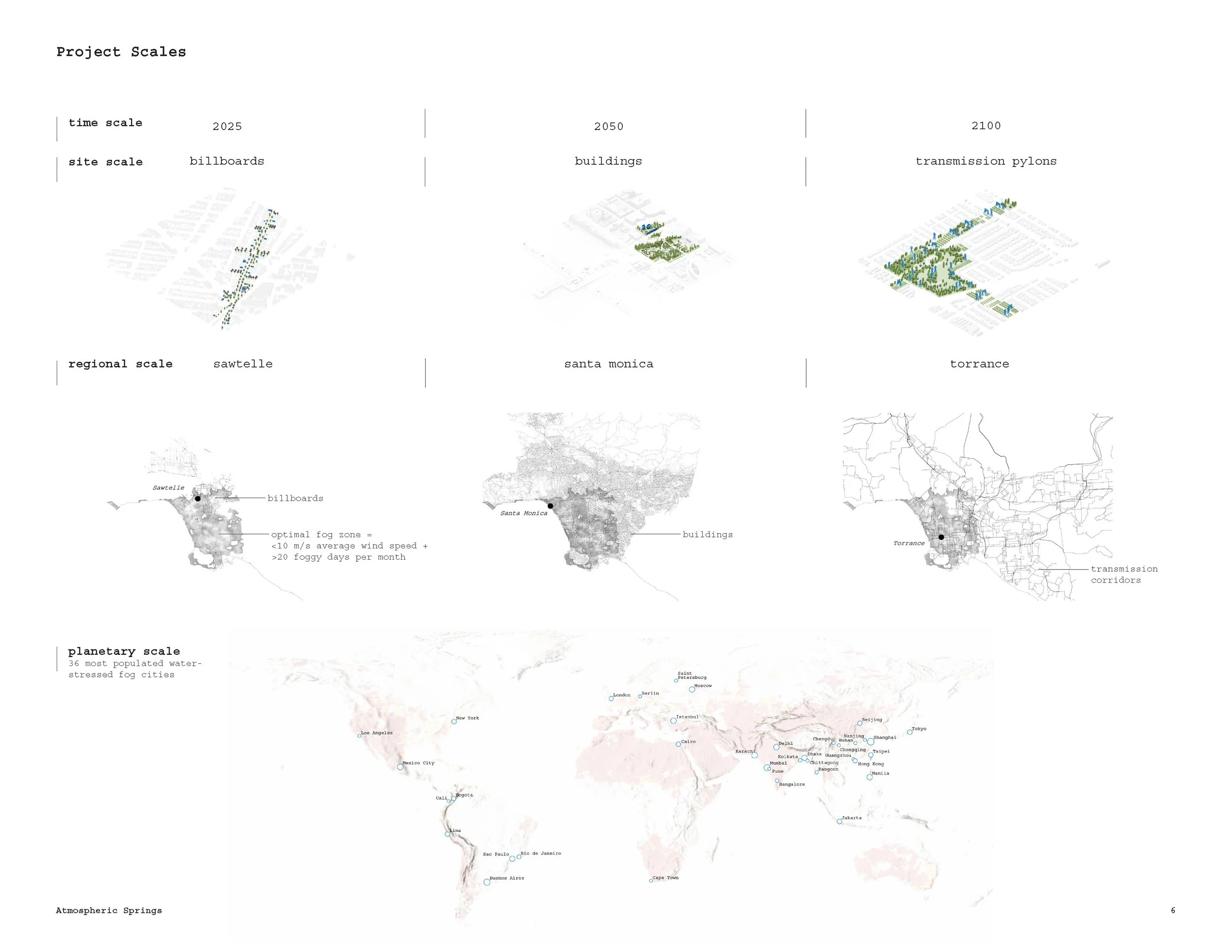
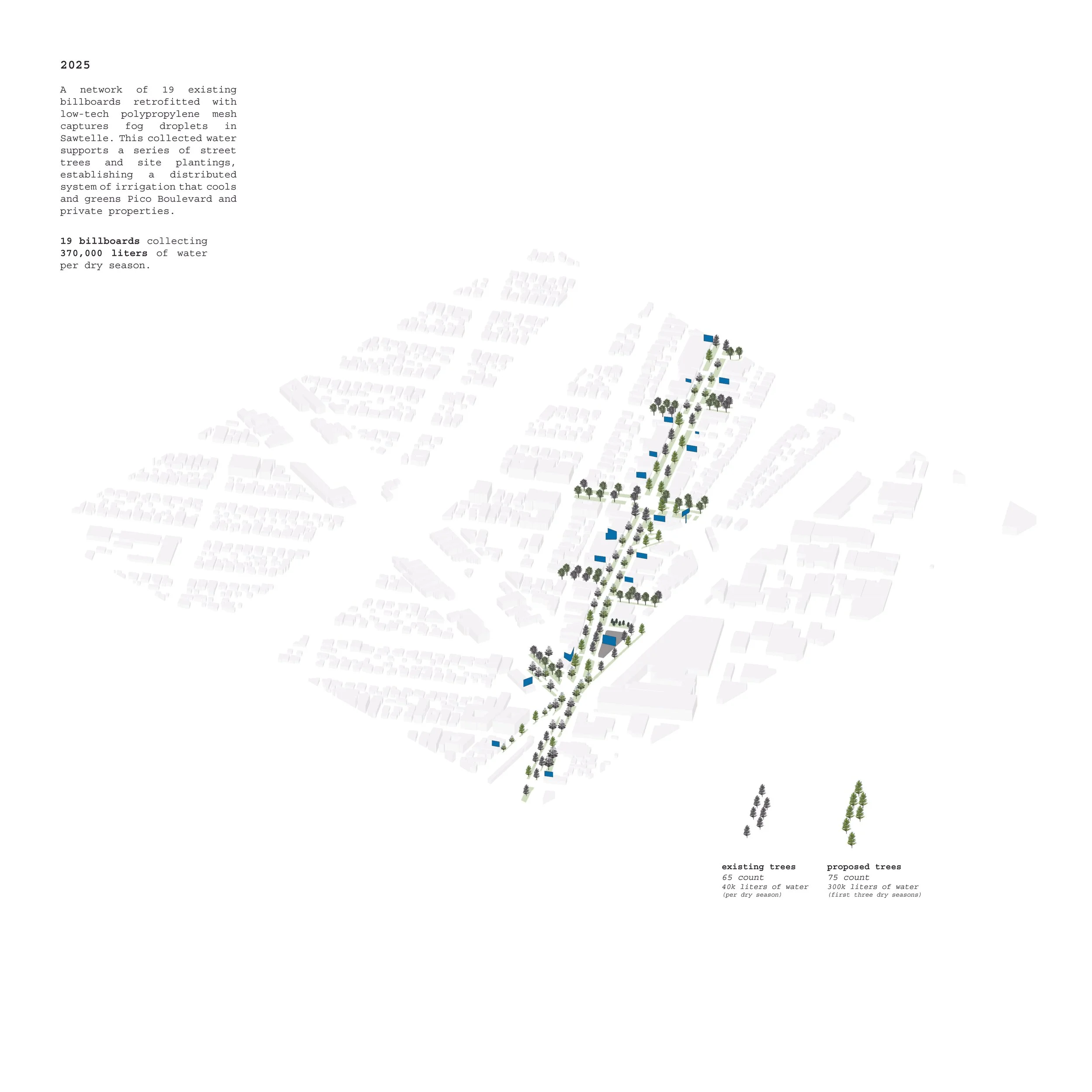
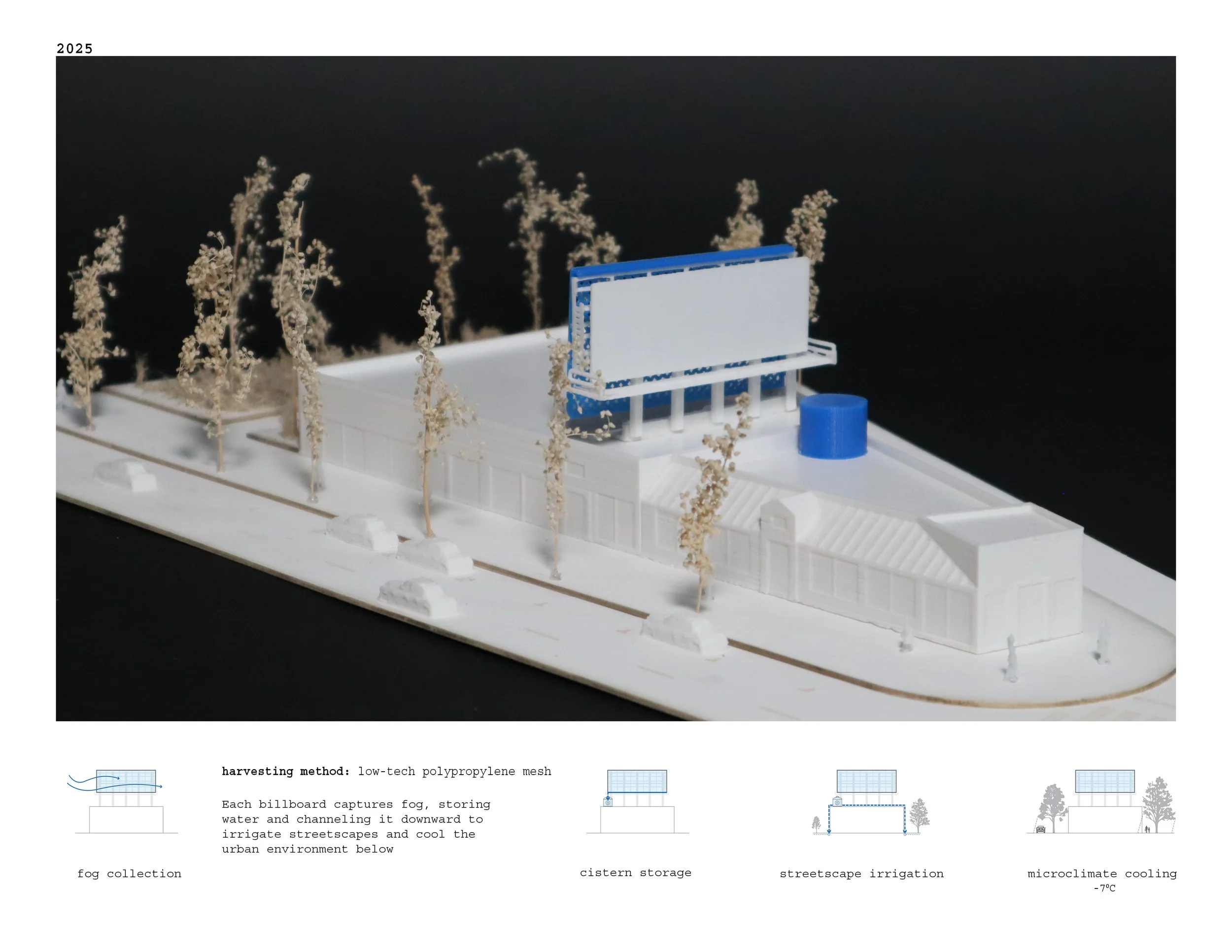
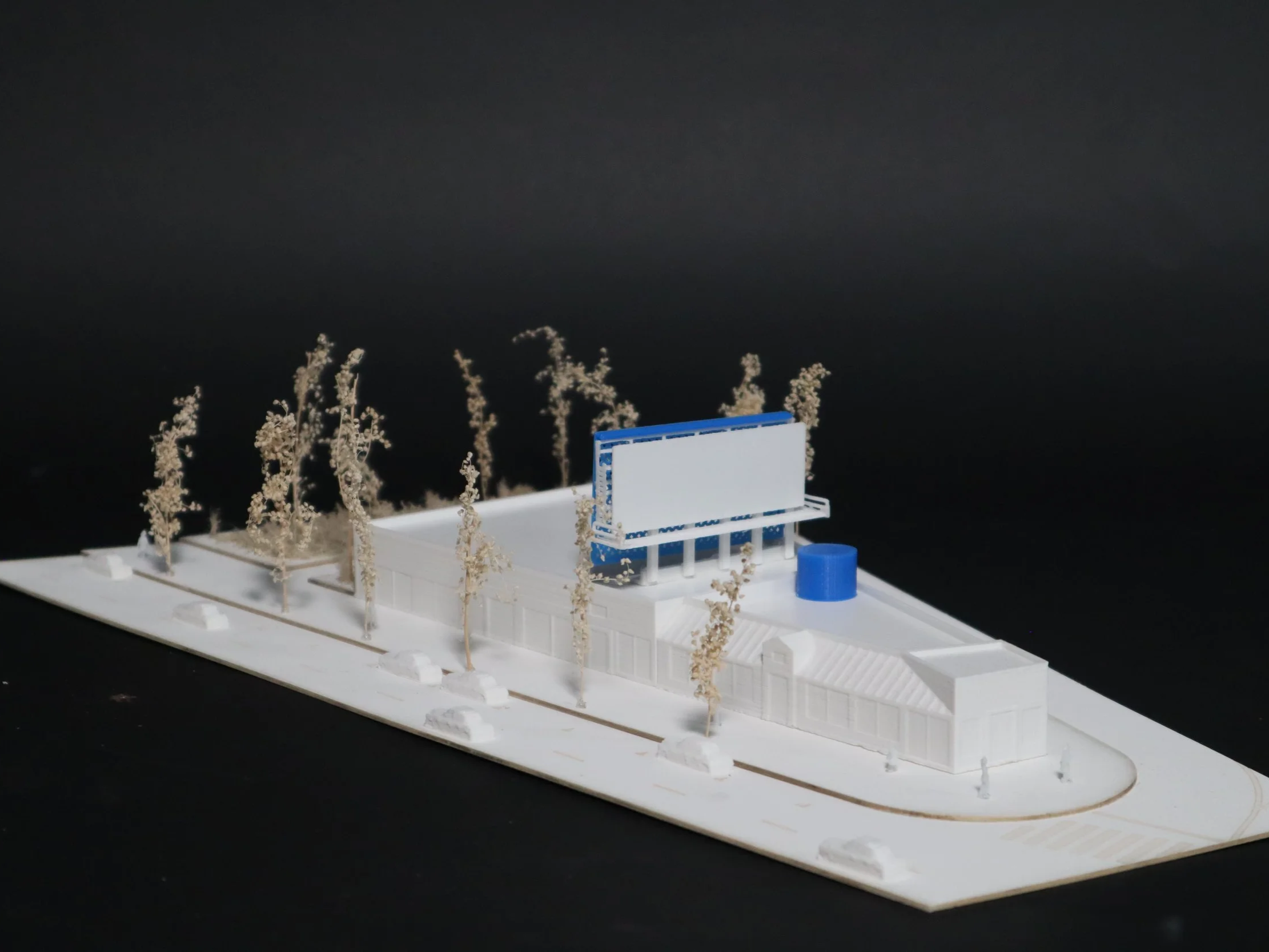
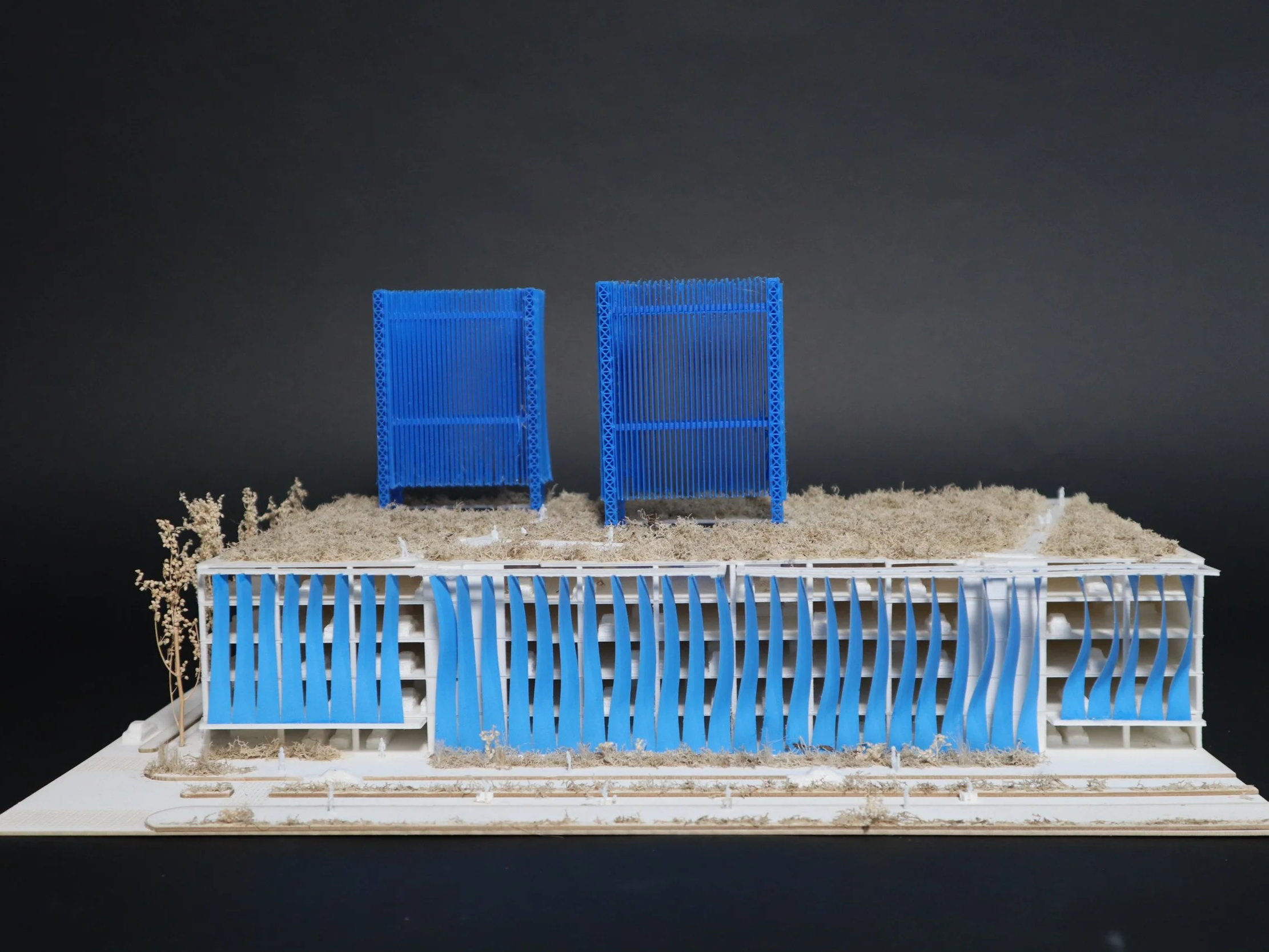
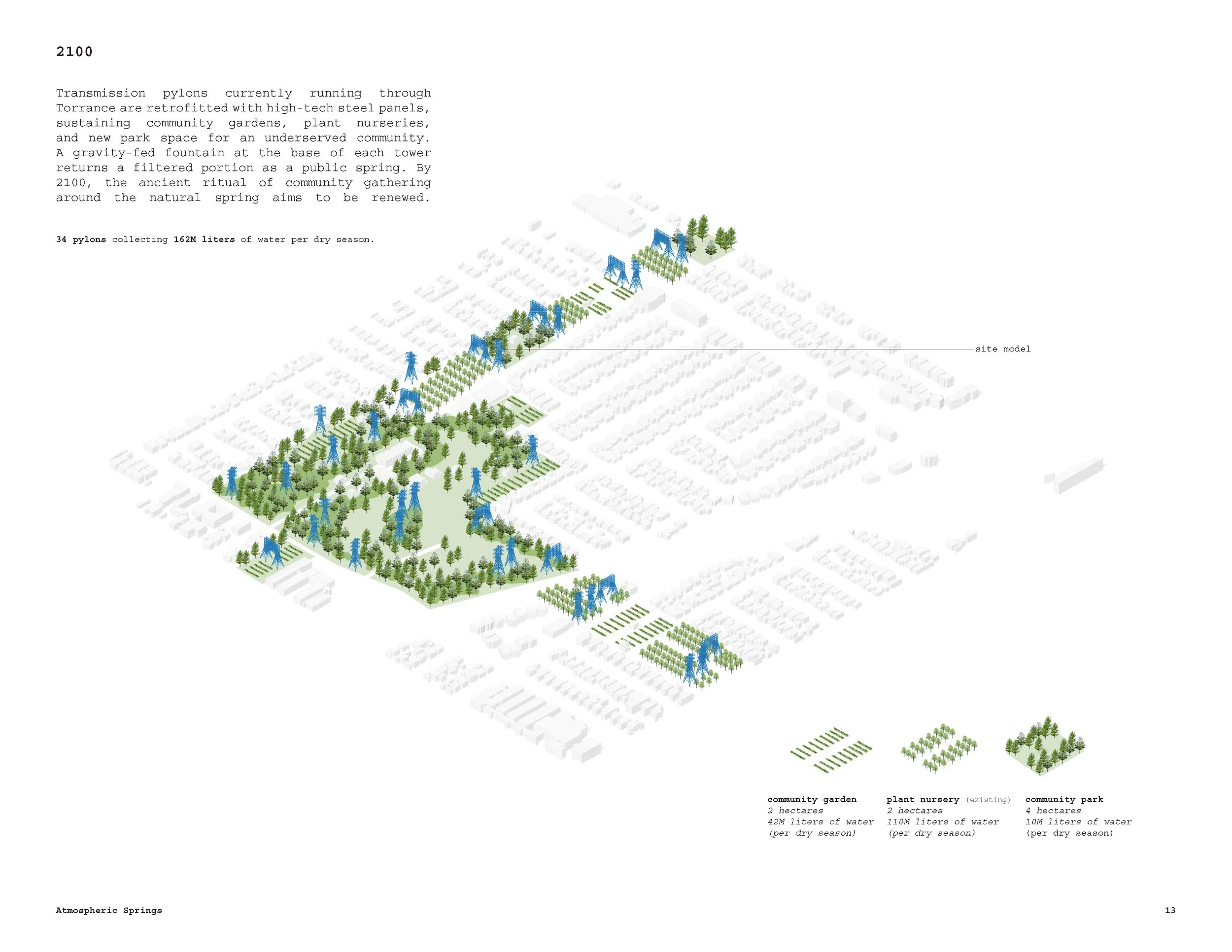
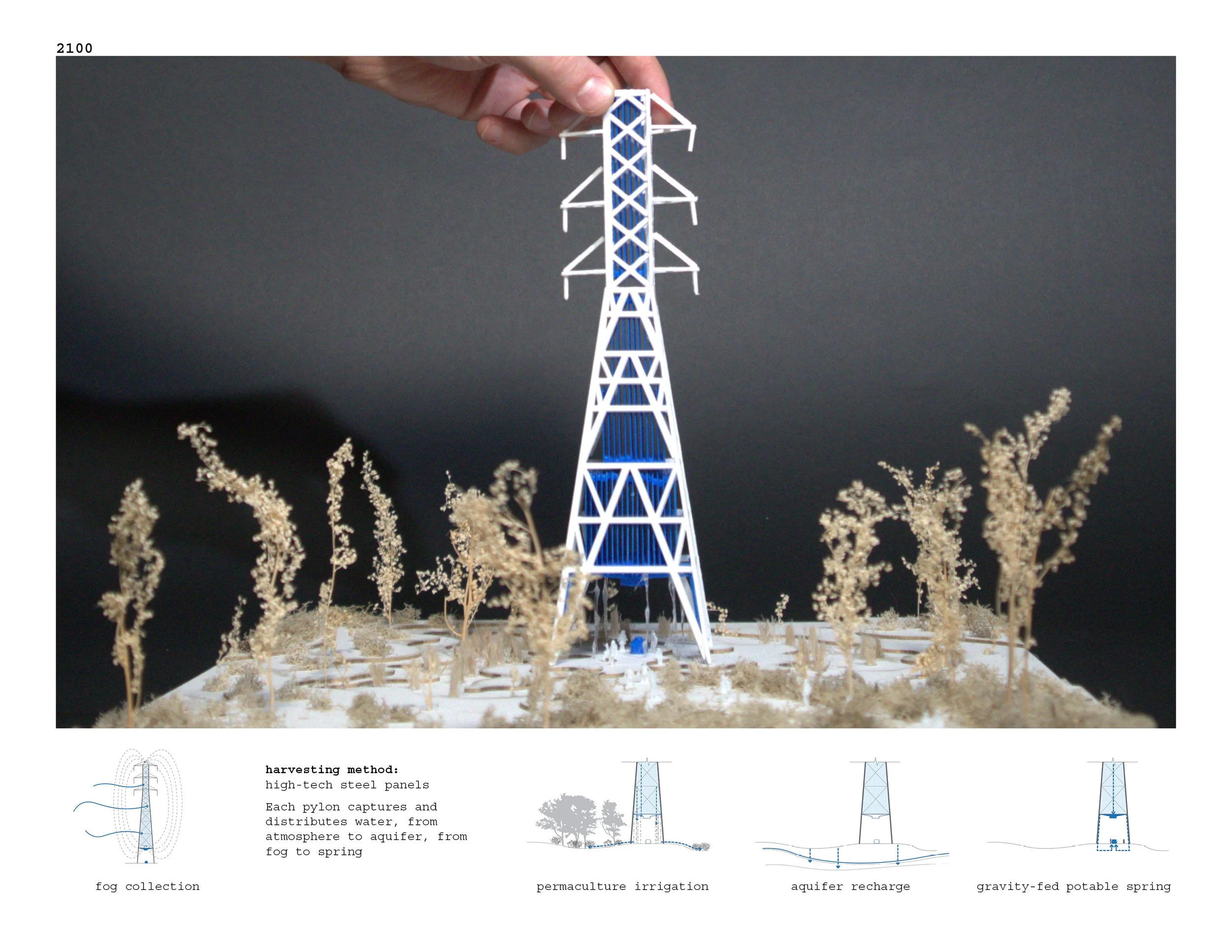
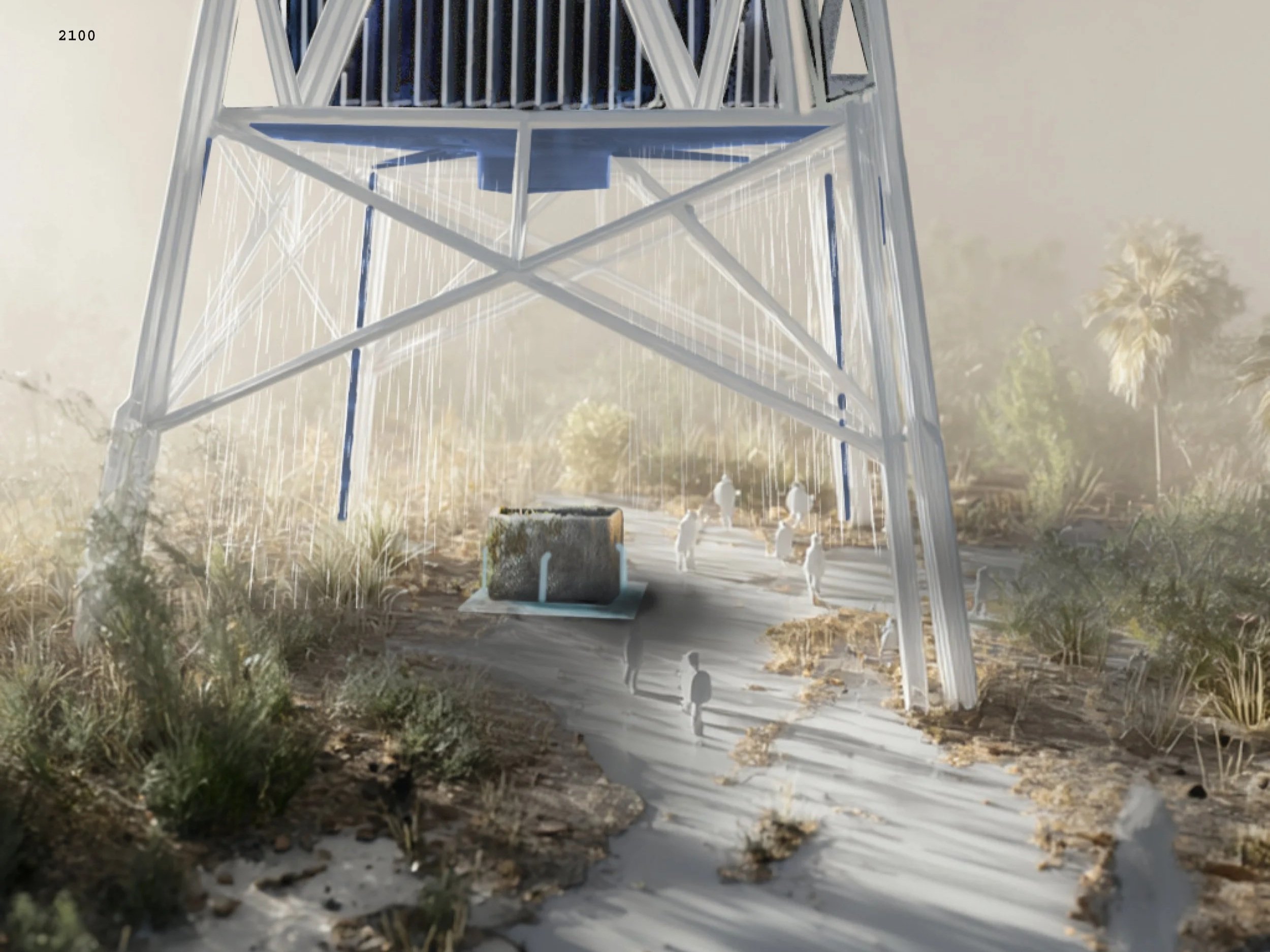
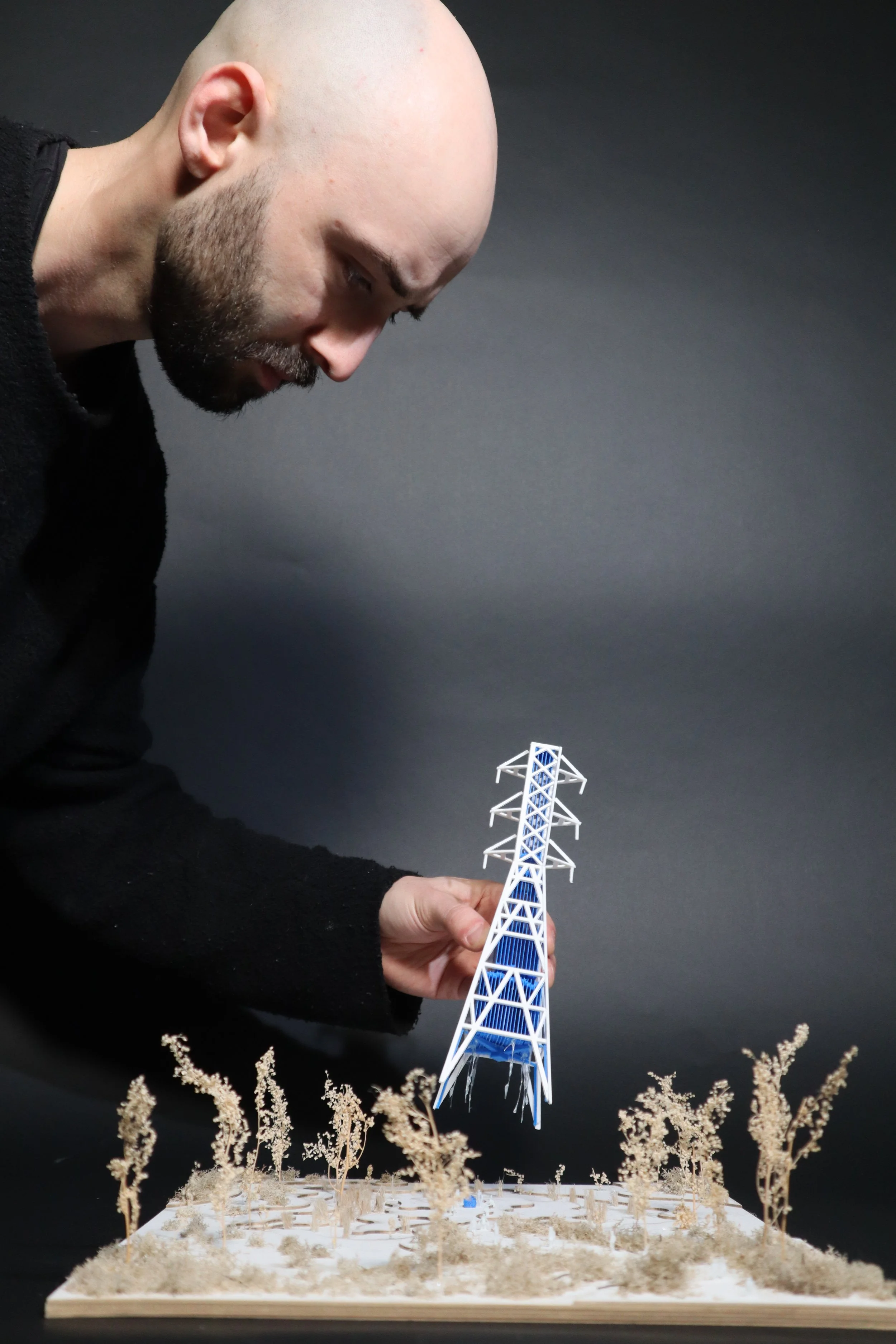
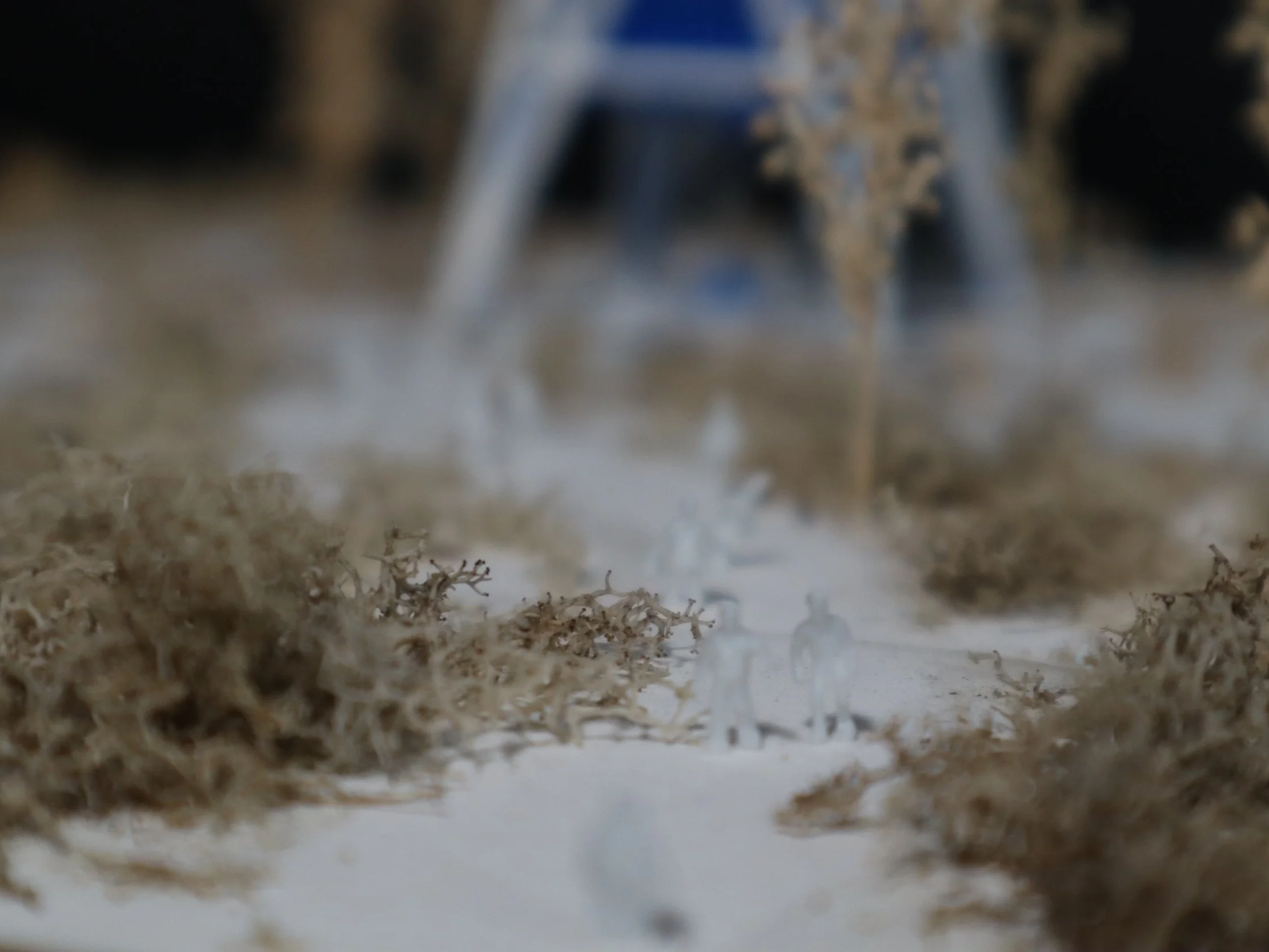
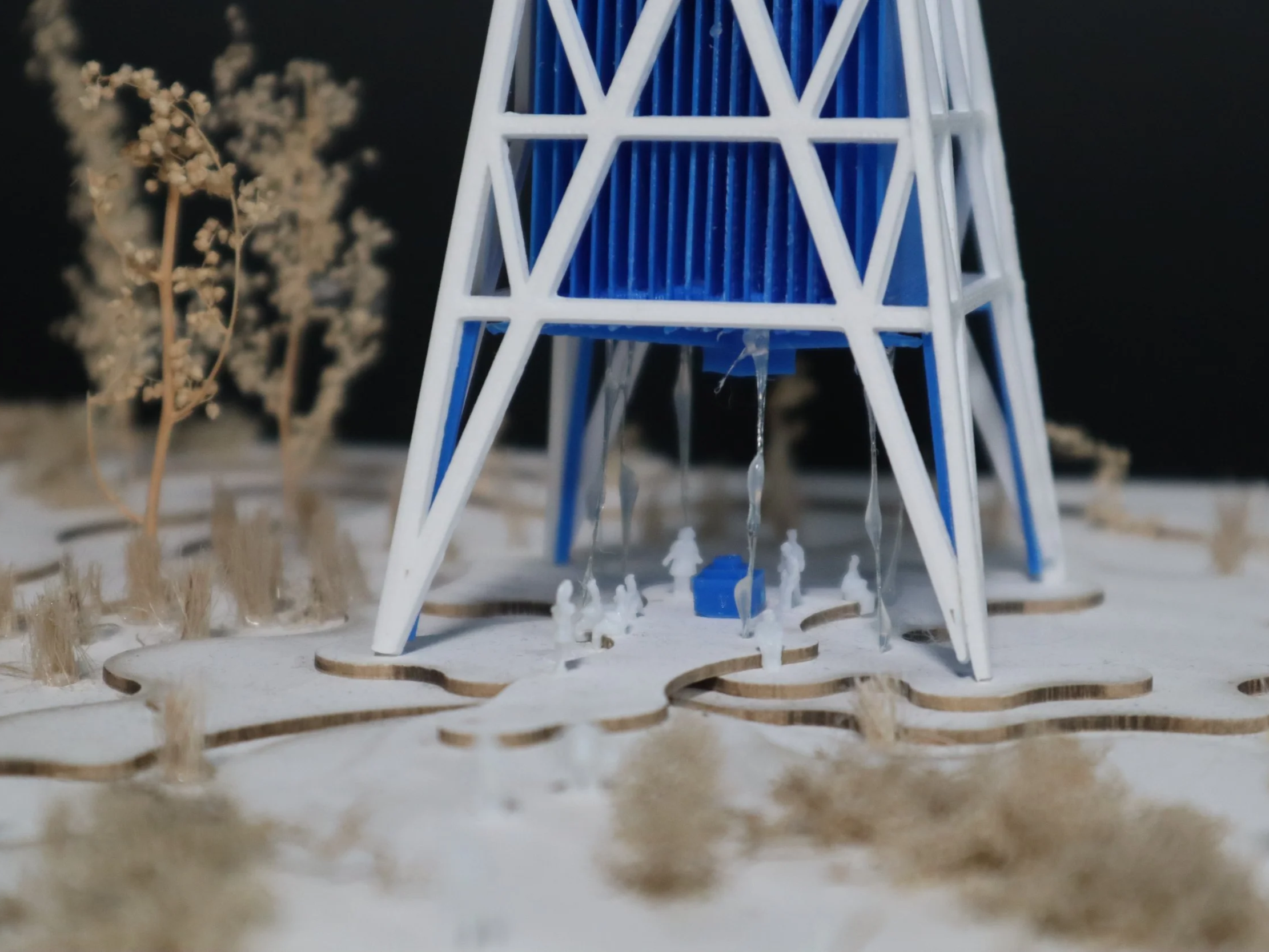
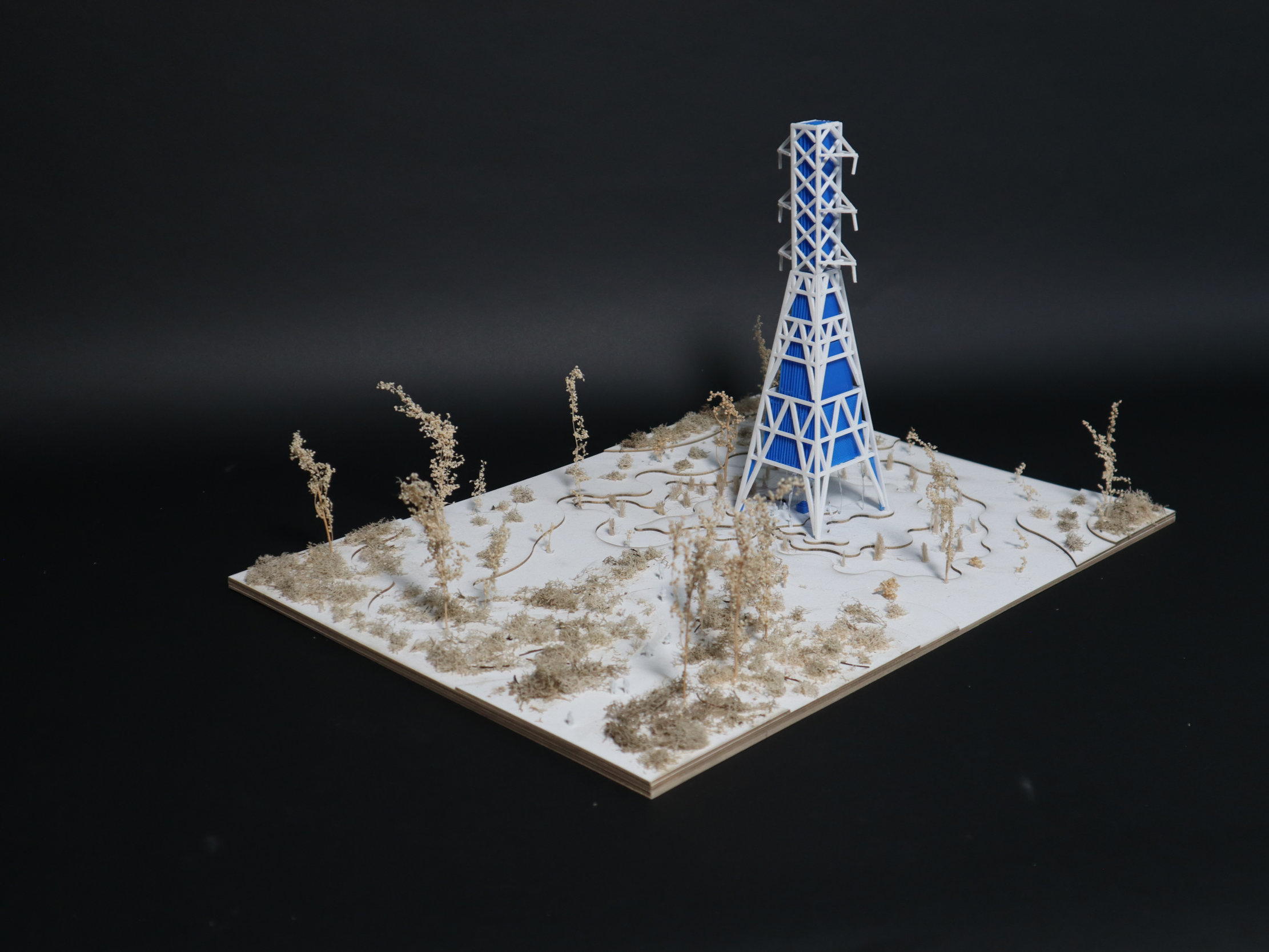
Los Angeles imports nearly 66 percent of its water from sources hundreds of miles away, yet every summer morning, coastal fog drifts across the city uncaptured. Atmospheric Springs develops a scalable framework for fog harvesting as civic water infrastructure, adapting existing urban structures to collect atmospheric moisture and return it to the landscape as irrigation, aquifer recharge, and public drinking water. Drawing from Indigenous practice and the logic of natural springs as communal space, the project captures atmospheric moisture to return water, and the ritual of gathering, to the public landscape.
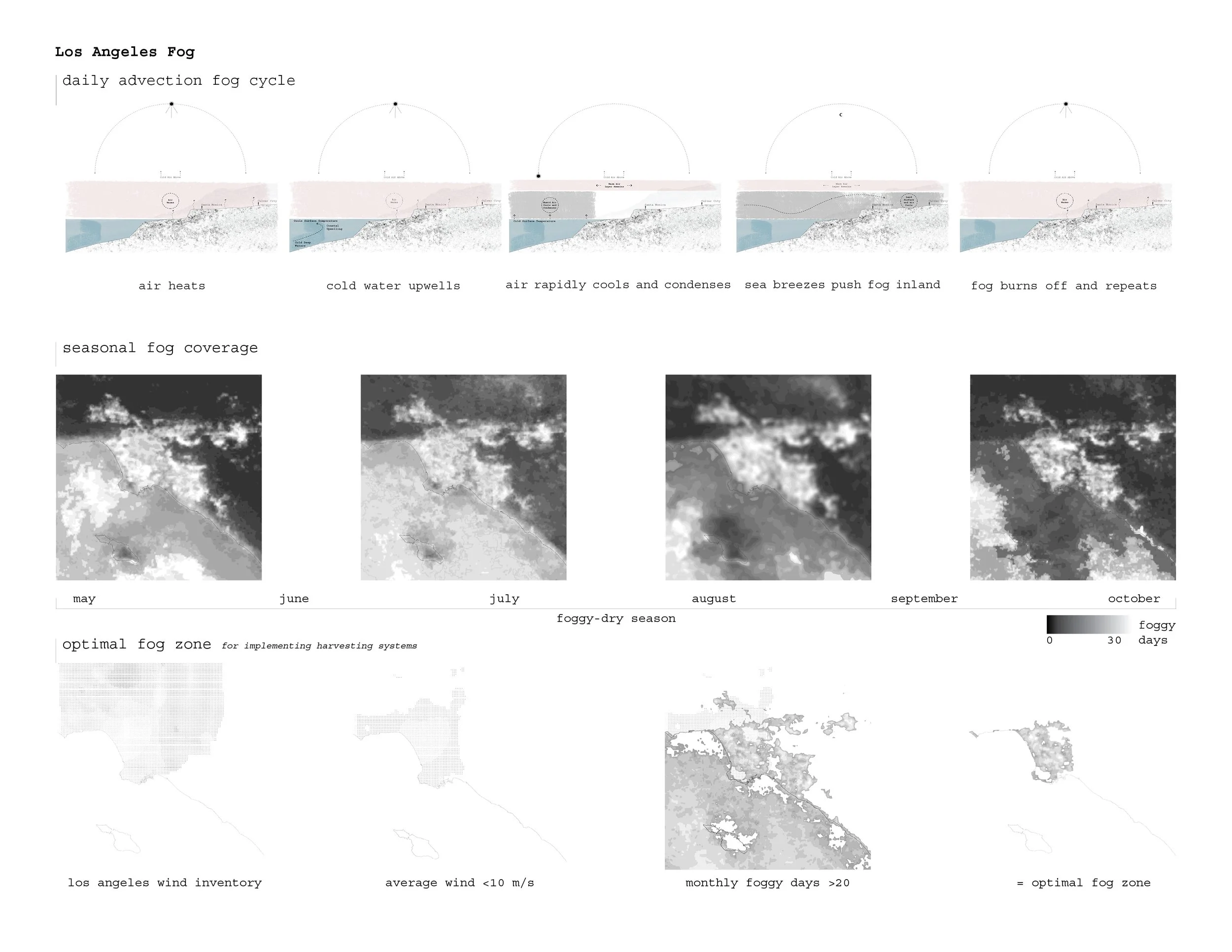
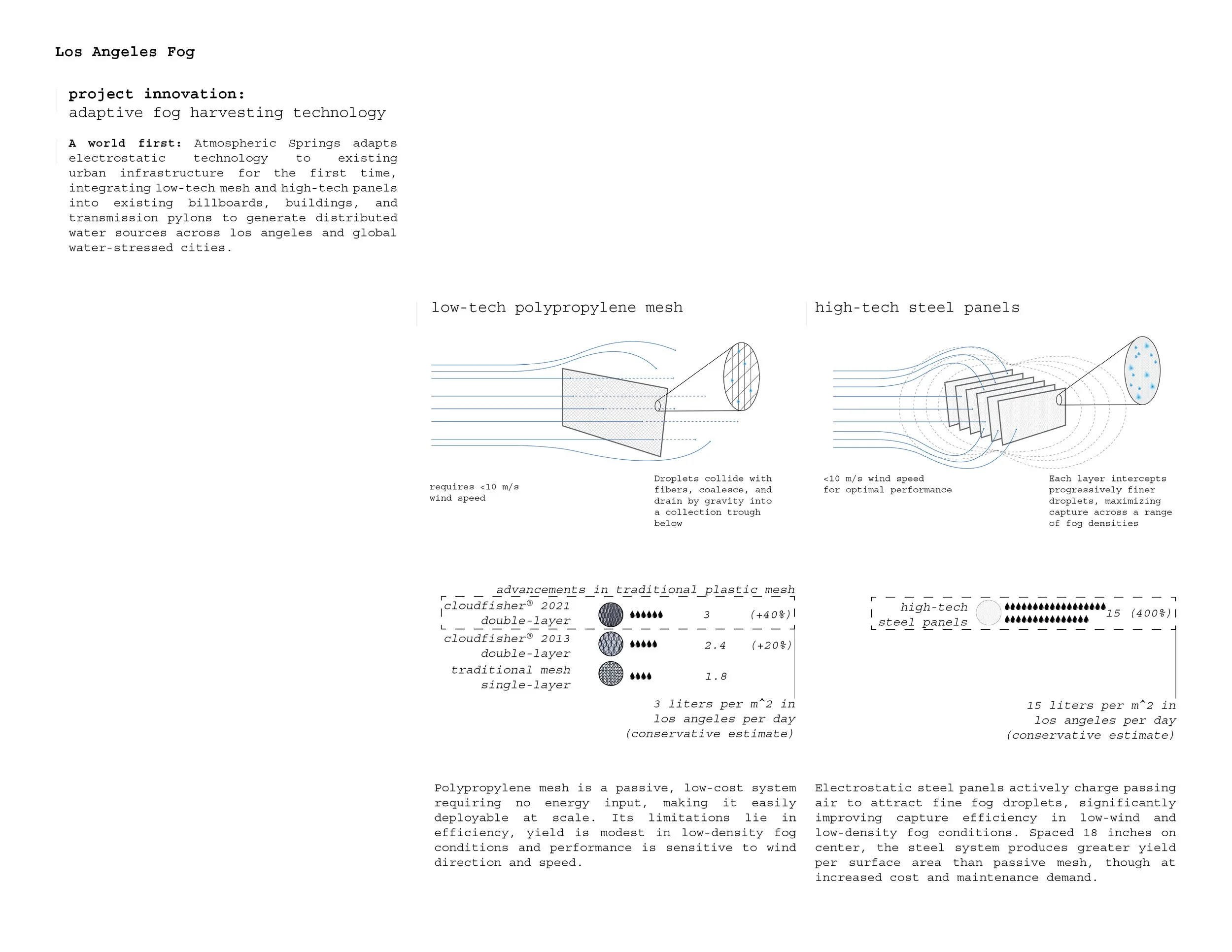
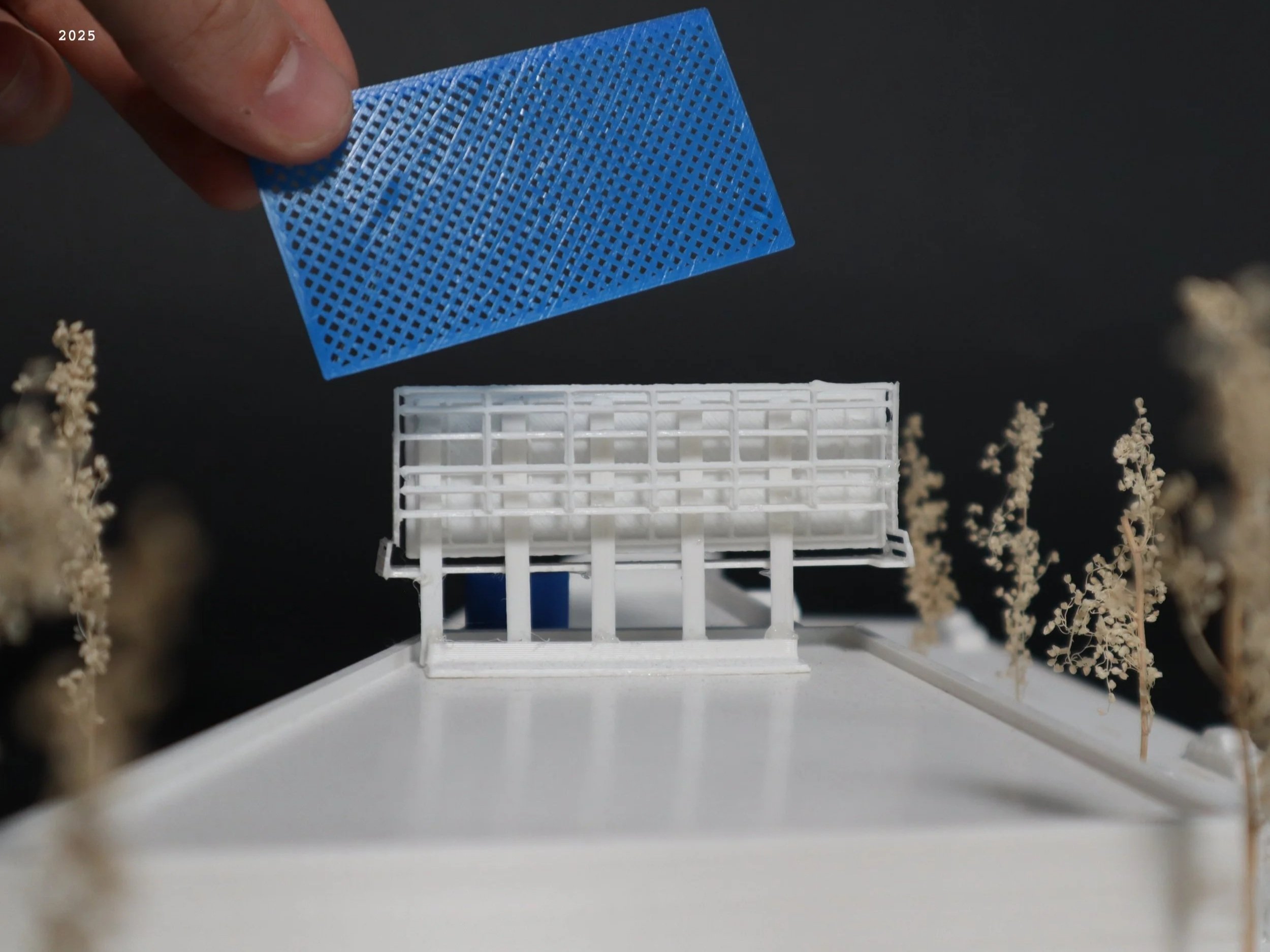
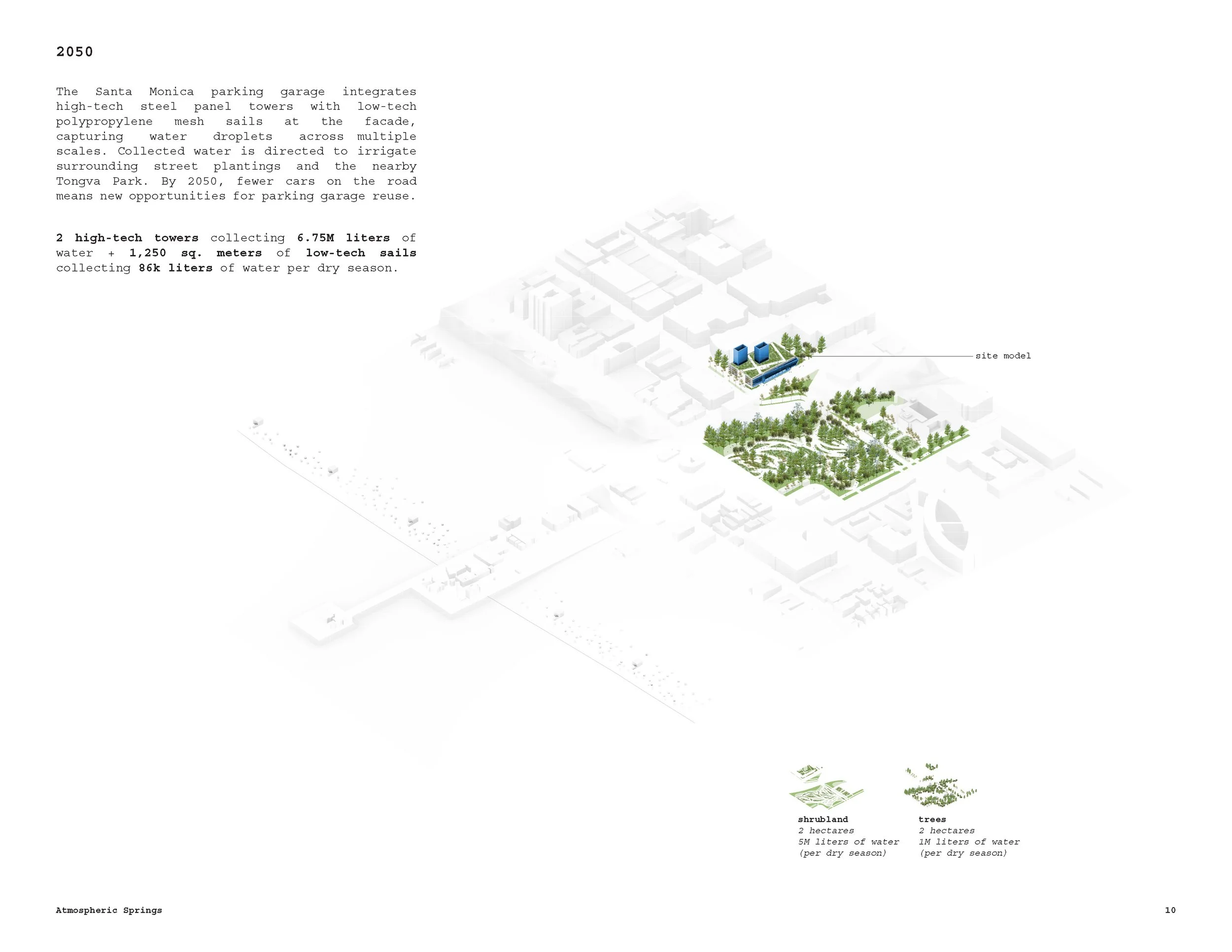
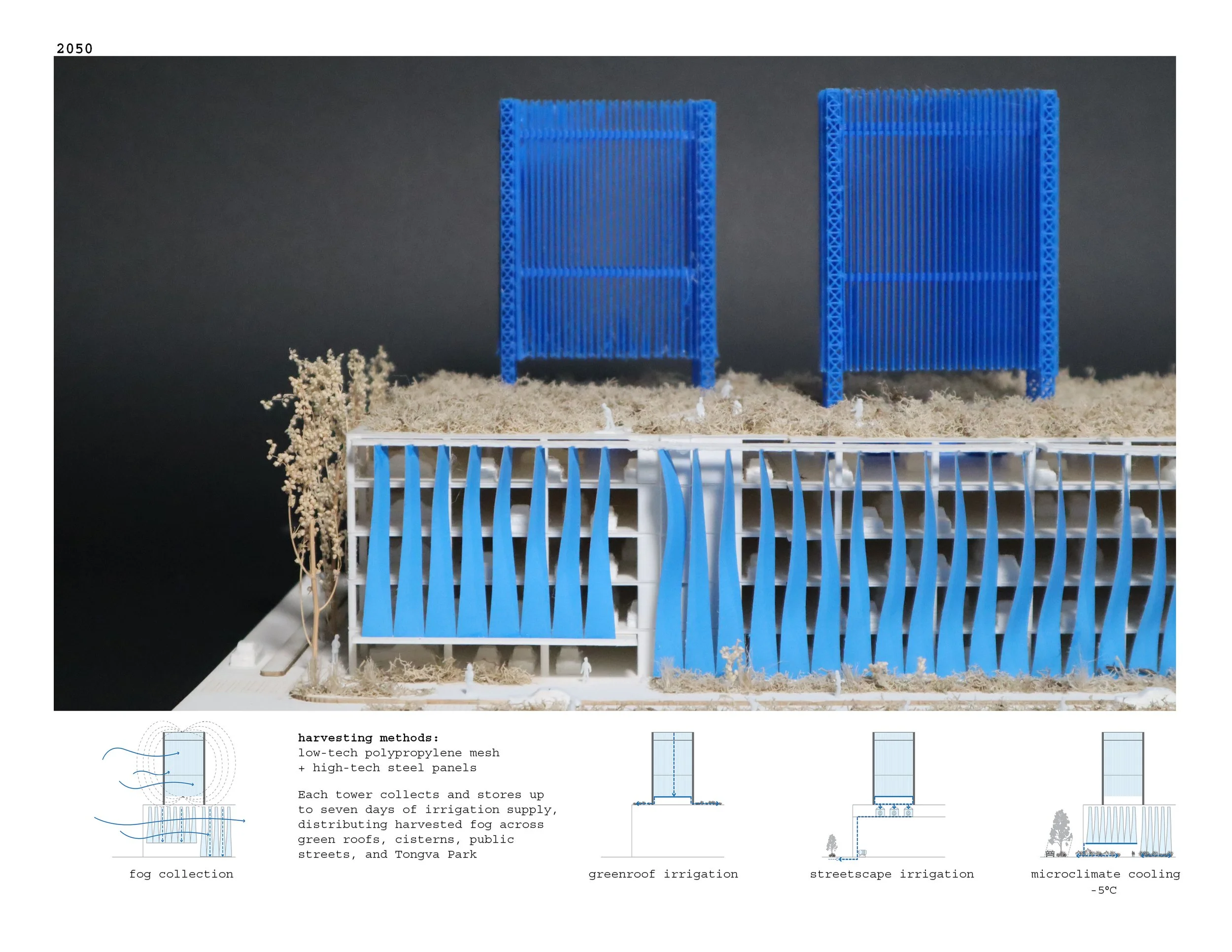
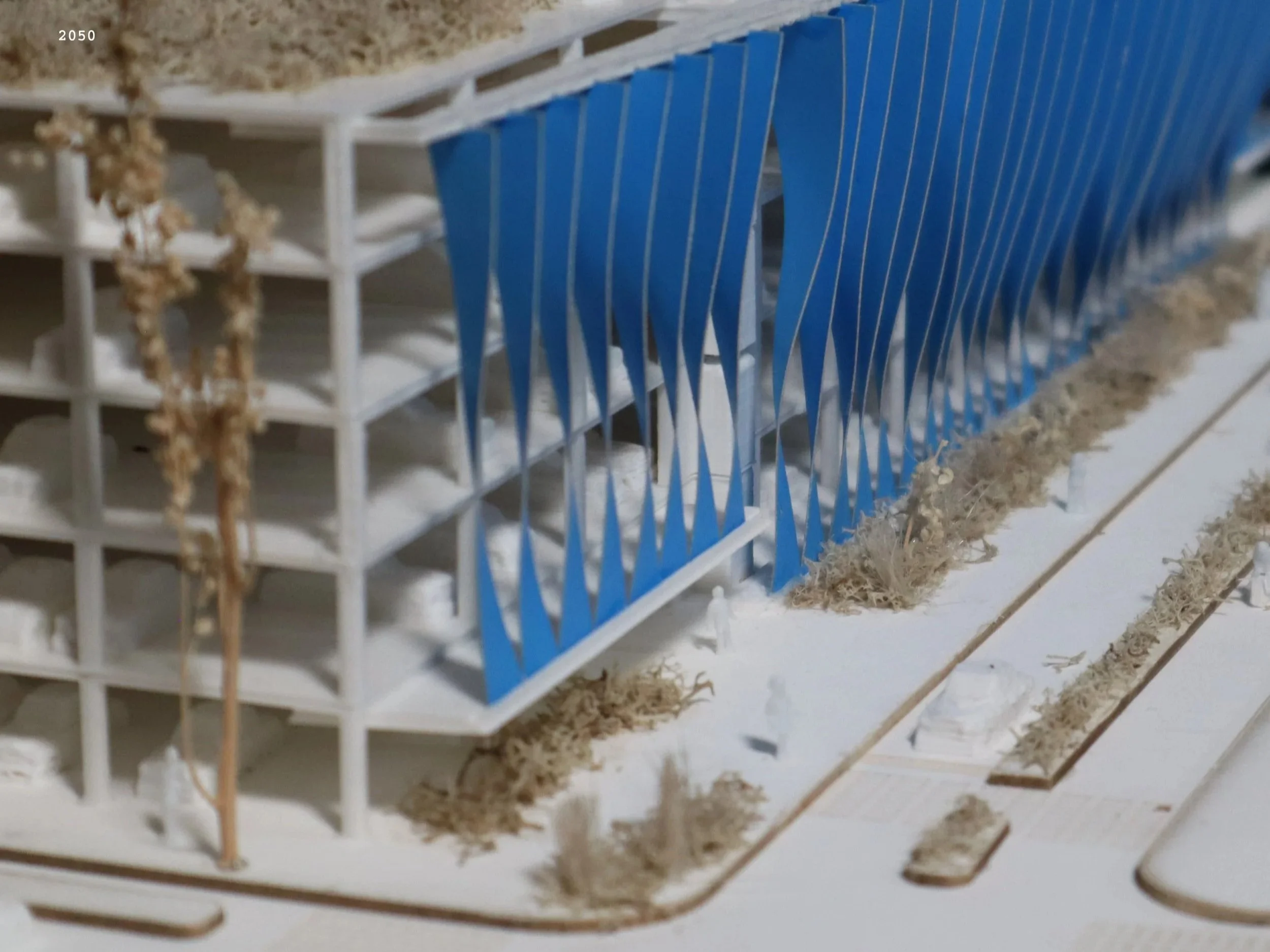
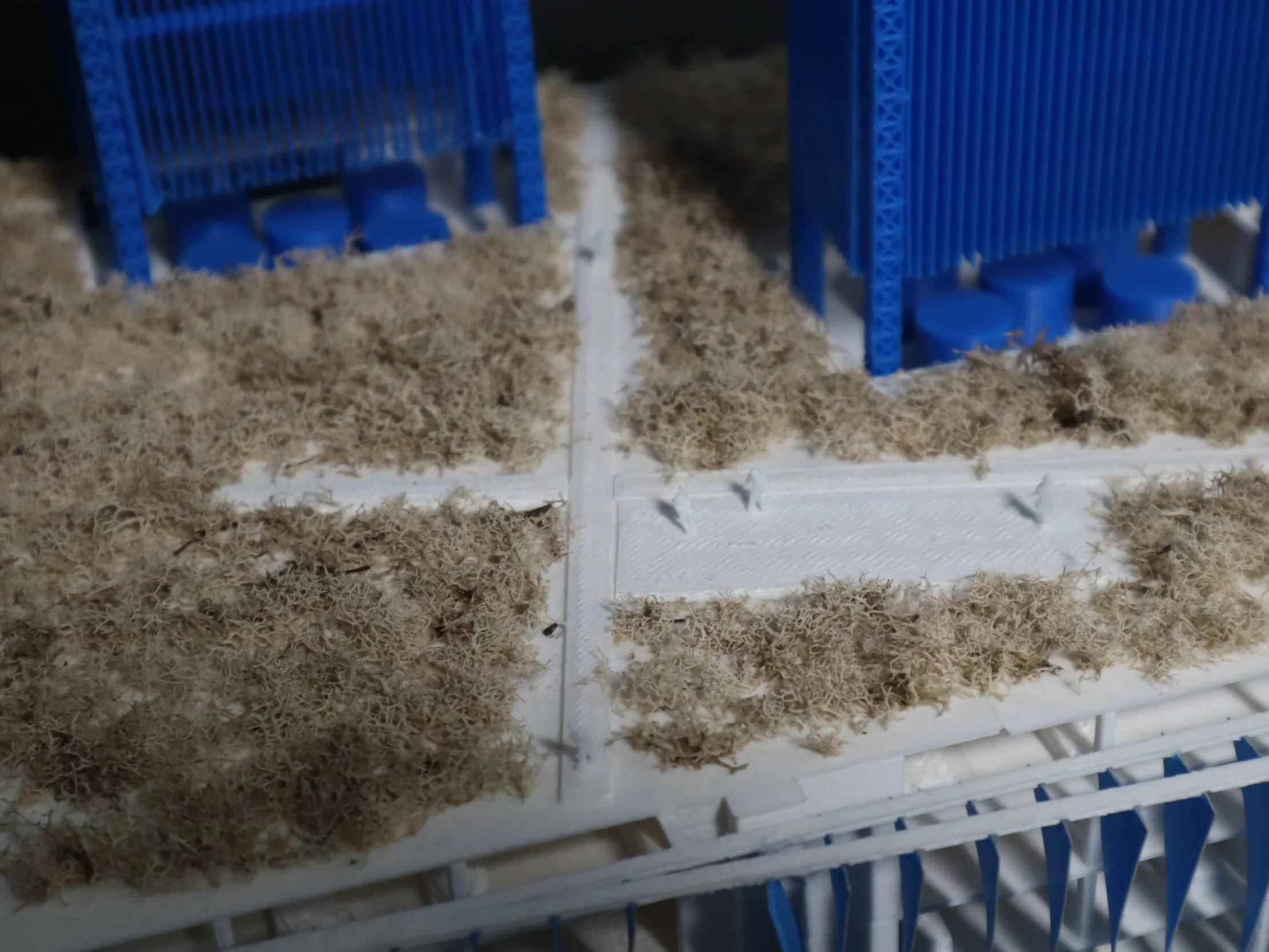
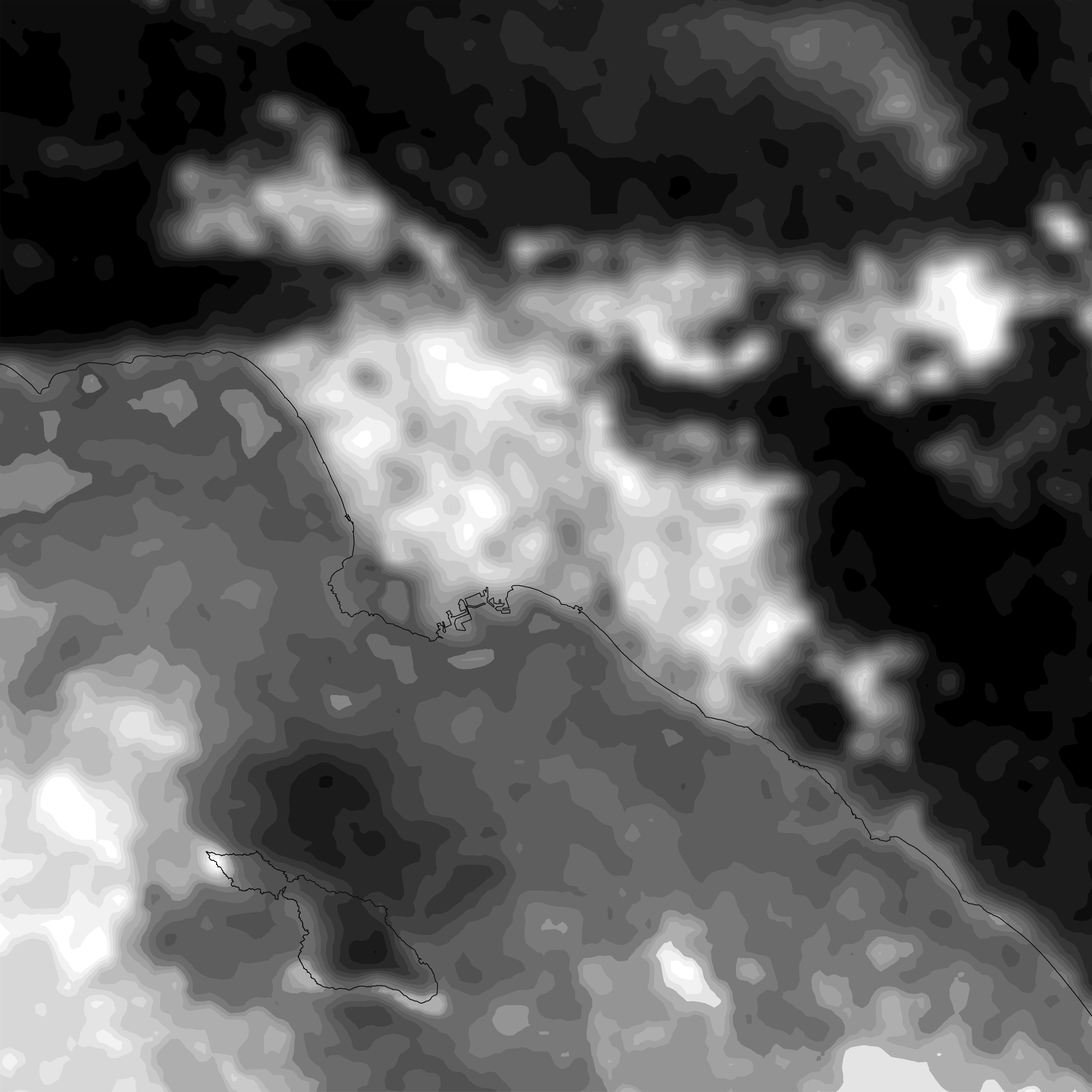
Using satellite-derived fog frequency data cross-referenced with wind velocity mapping, the project delineates an optimal harvesting zone across western Los Angeles. Two technologies are deployed: low-tech polypropylene mesh, a passive no-energy system achieving 3 liters per square meter per day, and high-tech electrostatic steel panels achieving up to 15 liters per square meter per day, a 400 percent improvement. Both systems channel captured water by gravity. Low-tech fog mesh has been used in rural communities for decades but never at urban scale, and electrostatic water droplet capture has been demonstrated by MIT venture Infinite Cooling but never deployed for natural fog harvesting, anywhere in the world. Atmospheric Springs is the first proposal to adapt both technologies to existing urban infrastructure as a distributed civic water system, scalable, non-extractive, and low-energy. Its three-scale framework is transferable to water-stressed fog cities globally.